Catalog topic · Format & Platform
Standalone Box audio gear
Browse 10 public product pages associated with Standalone Box on Eura.
Related format & platform topics
Products related to Standalone Box

Roland TR-8S
Roland TR-8S Rhythm Performer is a battery of a rhythm machine in the boîtes à rythmes category. It is built on the lineage of Roland’s TR-808, TR-909, TR-707, TR-606, and TR-727 sounds, offering a substantial kit and part system for drum programming. It supports 128 User Kits and 128 User Patterns, with 11 instrument parts plus a dedicated part for trigger out, and it uses a 16-step sequencing structure per variation. Notable features include an extensive array of instrument tones across bass drum, snare, toms, hats, cymbals, percussion, and presets plus user-imported samples via SD card, all accessible through multiple effects and per-instrument processing. The unit provides a broad set of output and I/O options, including MIX OUT, ASSIGNABLE OUT/TRIGGER OUT ports, EXT IN, a dedicated TRIGGER OUT, MIDI in/out, USB for Audio/MIDI, and a DC input, enabling flexible live and studio setups. Typical use cases center on tempo-driven beat production and live performance, with a workflow that supports rapid variation changes (8 variations per pattern) and multiple trigger outputs for modular or external gear. The device emphasizes hands-on control with live performance versatility, backed by a comprehensive suite of effects and a robust sample-import capability for expanded sonic texture.

Roland SP-404 MKII

Ableton Move
Ableton Move is a portable groove machine by Ableton, designed as a compact groove box with a built-in screen and an 8 x 4 pad grid plus encoders. It is positioned in the groove machines category and can be used in standalone mode or connected to Live. Key features include a ready-to-use workflow with a compact, self-contained format and a hardware control surface that supports quick sequencing and sampling workflows. Several user reviews highlight its standalone usability for sketching ideas and its straightforward transfer of projects to Ableton Live, as well as the tactile pads and accessible layout. Typical use cases involve mobile beatmaking and idea generation, with users reporting it serves well as a nomadic beatmaking companion or as a compact entry point into sampling and looping. The device is described as premium in construction and focused on a fluid, hands-on workflow, with emphasis on its portability and ergonomic controls.
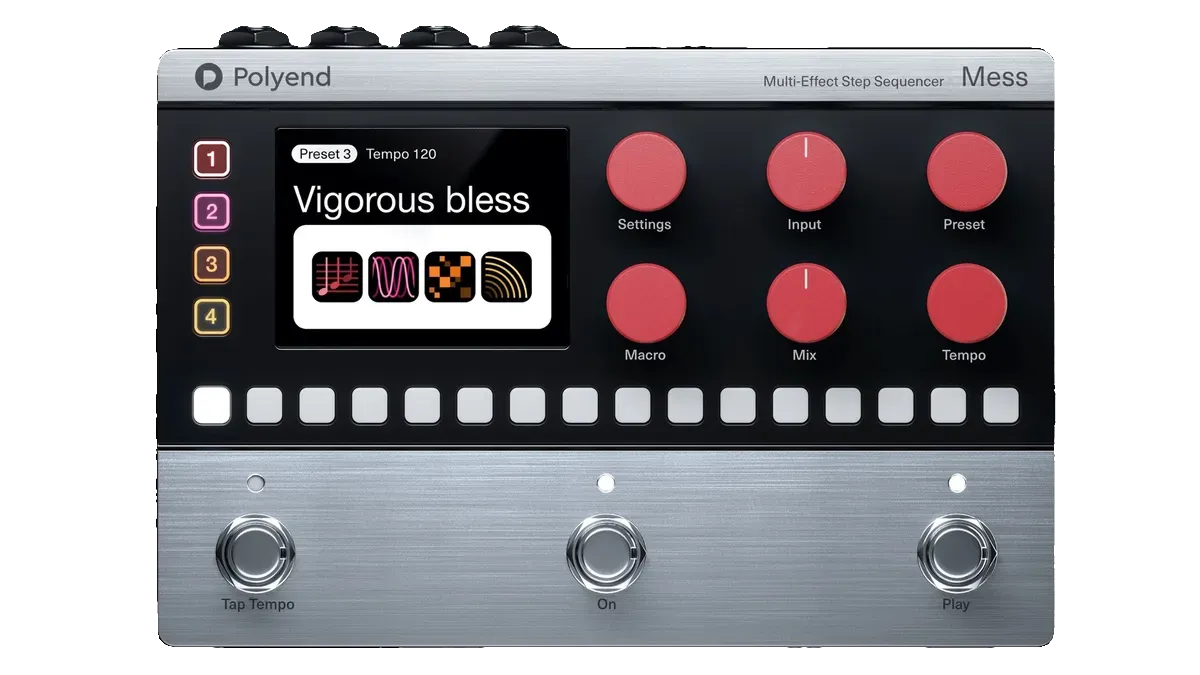
Polyend Mess
The Polyend Mess is a multi-effect step sequencer designed to enhance audio creativity. Released in 2025, this device allows users to stack up to four effects simultaneously, providing a dynamic sound experience that evolves as you play. With 125 stereo effects available, the Mess offers a wide range of sonic possibilities, from traditional reverb and delay to more experimental granular and glitch effects. This pedal is particularly suited for musicians looking to transform simple guitar lines or other audio sources into rich atmospheres and engaging textures. The sequencer functionality enables rhythmic and evolving soundscapes, making it ideal for live performances or studio work. Additionally, the Mess features 150 presets for quick access to creative sounds, along with the capacity for users to save up to 1,000 of their own custom settings. Connectivity options include TRS inputs and outputs, MIDI in and out, and USB-C, allowing for versatile integration with various audio setups. The device operates on a power supply of 9-18 V DC, with a minimum current requirement of 500 mA, although a power adapter is not included.
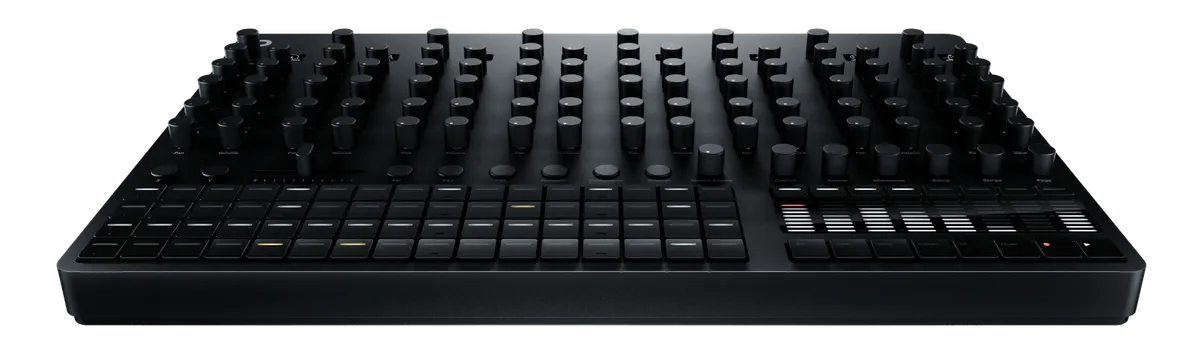
Polyend Drums
Polyend Drums is a hybrid drum machine, blending analogue and digital sound generation in a chrome-aluminium chassis. It features four analogue voices, each built around dual analogue oscillators, a dedicated noise source, and an additional digital oscillator for hybrid layering or FM-style modulation. A multi-mode analogue filter and VCA shape each voice, with further digital and sample-based instruments available in the instrument set. Its sequencing and performance controls are designed for real-time operation. The device offers an 8-track sequencer with up to 64 steps per track, and per-track controls including probability, micro-timing, and pattern chaining. A performance surface includes an X0Y morphing control for kits and instant trigger of fills, while a three-group effects system provides insert, send, and master processing, with per-track insert sequencing. The I/O complement supports extensive routing and integration: 2 main 6.35 mm outputs, 8 individual 6.35 mm outputs per track, 2 audio inputs, MIDI in/out/thru via 3.5 mm, USB-C for audio and MIDI, and a 12 V/4 A power supply. The unit is available in black and silver finishes and weighs 3.1 kg.
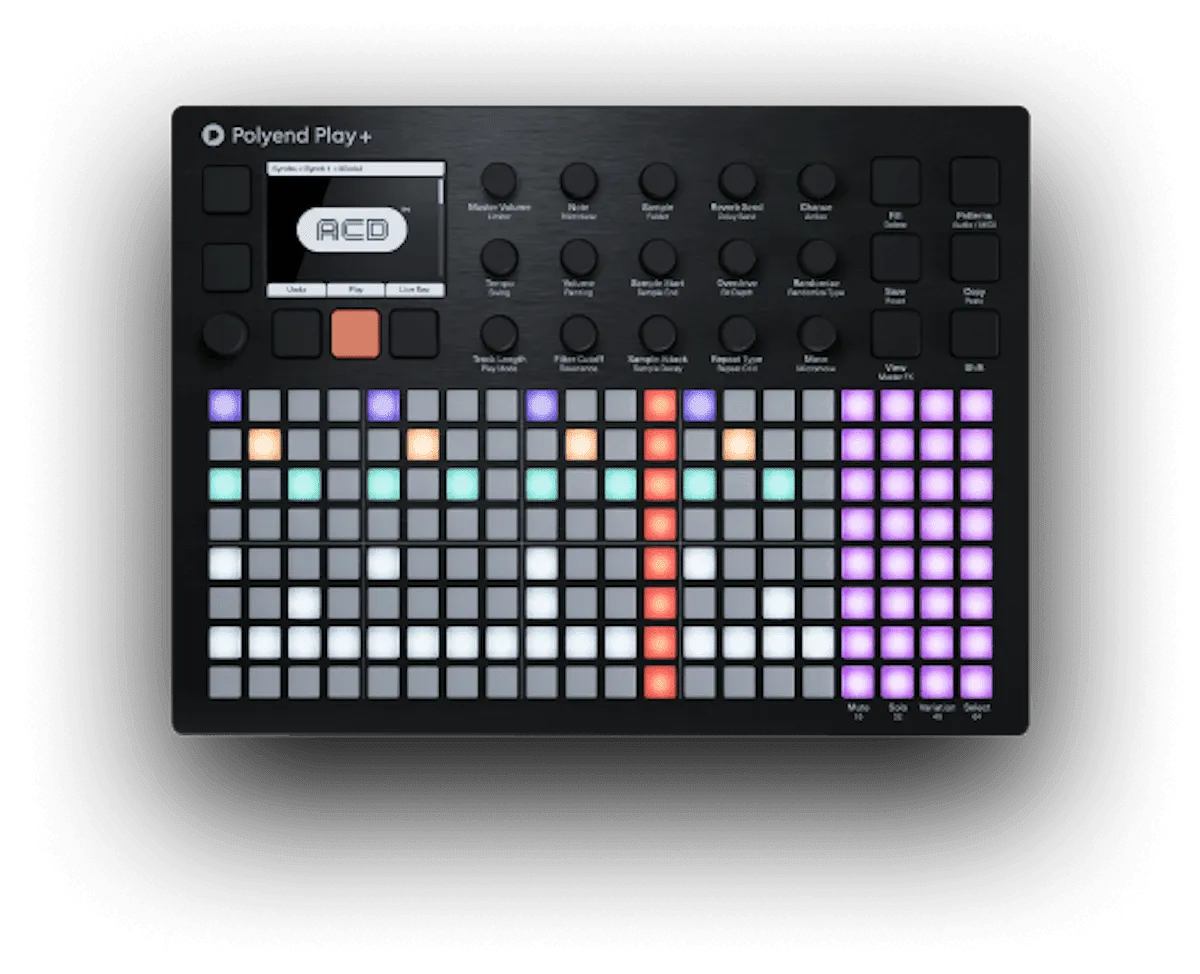
Polyend Play+
Polyend Play+ is a Groove Machine that functions as a 16-track groovebox with multisourced synthesis and stereo sampling capabilities. It features an upgraded internal architecture designed to deliver richer stereo sounds and multitimbral polyphonic synthesis, while enabling seamless audio over USB to a DAW. The device also includes a new patch editor and a dedicated stereo expansion for samples, alongside multi-track USB audio collaboration. Notable elements include several built-in synth engines, a patch editing workflow with 9 encoders for patch parameters, and dedicated per-track performance features. The Play+ can send up to 14 stereo tracks to a DAW over USB, supporting multi-track audio workflows, and provides a range of effects such as delay, reverb, bitcrusher, overdrive, and master EQ to shape sounds. Typical use cases center on live playing and studio pattern creation, leveraging the Perform mode and various generative options to craft rhythms and evolving textures. The unit is described as suitable for creating and modeling rhythms and patterns with multiple tracks, while offering a flexible workflow for immediate playability and on-the-fly sound design.
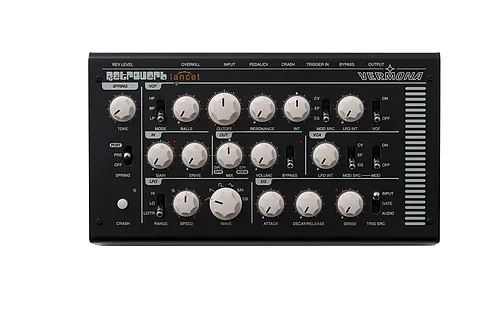
Vermona Retroverb Lancet
The Vermona Retroverb Lancet is an analogue multi-effect processor designed for effect enthusiasts. It combines spring reverberation, analogue multimode filtering, a VCA, and overdrive, all modulated by an ultra-fast LFO and a flexible envelope. The module is tailored to accept signals from guitars, basses, keyboards, organs, or microphones, and can generate percussion sounds using a dedicated crash function. Key features include a three-spring reverb with a selectable pre- or post-routing path, a versatile filter with 24 dB/octave slopes (low-pass, high-pass) and 12 dB/octave (band-pass), and a control set that includes an envelope generator, envelope follower, and external CV for modulation. The device uses an external 12 V/1000 mA power supply and remains fully analogue, offering a broad palette of textures from subtle modulation to more aggressive tones. Common use scenarios encompass shaping guitars, synths, or vocal material with space and character via spring reverb, dynamic filter sweeps, and harmonic overdrive. The unit’s crash and envelope-driven modulation enable percussive, tempo-synced, or evolving effects, making it a flexible sound-design tool for studio and performance contexts.

Arturia MiniFreak
Arturia MiniFreak is a hybrid instrument, blending analog and digital technologies in a polyphonic synth. It offers six-voice polyphony with two digital oscillators and an analog filter, plus a 7x13 modulation matrix and a 64-step sequence. In front, four encoders provide hands-on control for design and performance, while a dedicated front panel keeps many functions quickly accessible. The unit ships with a substantial preset memory and a software-agnostic, intuitive workflow designed for versatile sound design. Key features include a wide range of oscillator modes (23), a polyphonic arpeggiator and a 64-step sequencer, and a multi-mode resonant filter. The modulation system supports multiple destinations and envelopes, enabling intricate timbral shifts and dynamic control. Onboard effects and the compact, tactile interface contribute to a broad sonic palette, from punchy leads to evolving pads. The hardware includes external 12 V, 1 A power and a trio of MIDI-DIN, USB-B, clock in/out, and reset out I/O, supporting integration with other gear and synchronization. Typical use cases include studio sound-design sessions and hands-on live performance where immediate access to sound-shaping tools matters. The sound character spans from tight, percussive digital tones to richer analog-filtered textures, with extensive preset memory for quick access and exploration. The software variant MiniFreak V mirrors the hardware’s architecture for seamless integration in a digital workflow.
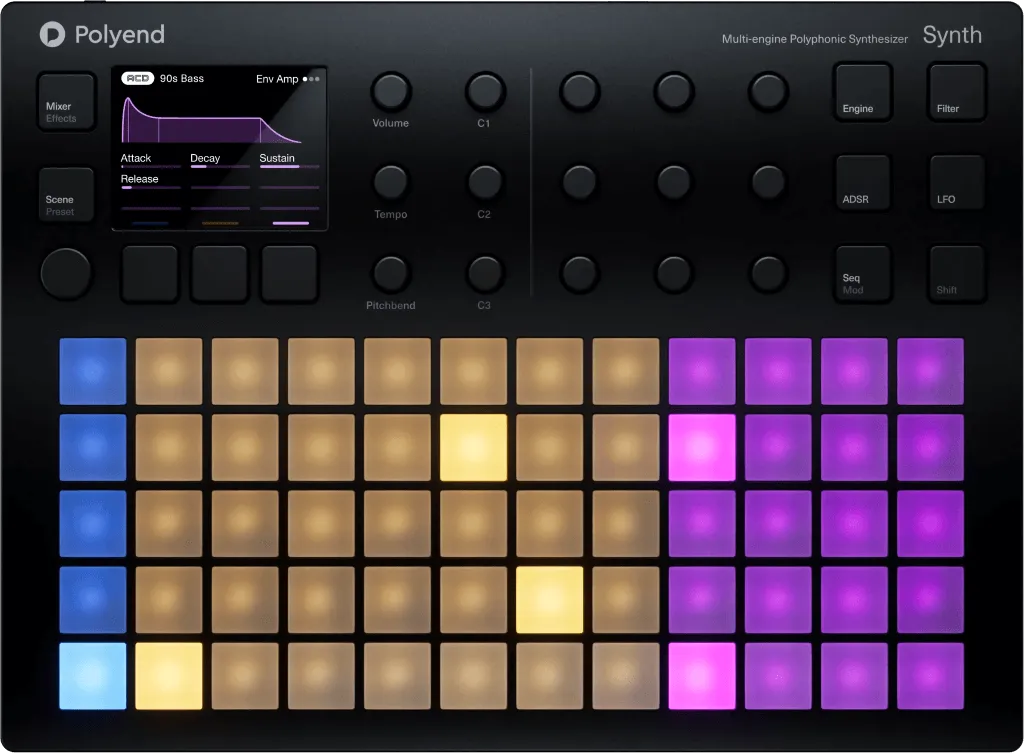
Polyend Synth
Polyend Synth is a compact polyphonic multi-engine synthesizer designed for modern production and live use. It belongs to the synth and digital workstation category, offering three engines playable simultaneously and a choice of nine engine types through a 3×3 knob matrix and smart grid workflow. Key features include independent three-synth playback with three effects and three sequencers/arpeggiators, plus a responsive visual interface and polyphonic aftertouch. The device supports USB-C power and USB connectivity, as well as MIDI In/Out/Thru, DIN MIDI, and stereo line/headphone outputs, making it a flexible tool for sound design, texture creation, and live performance. Storage is accessible via microSD, and the system emphasizes quick patch creation and scene recall with per-engine parameter control. Typical use cases involve creating evolving textures and layered sounds across three engines at once, using per-synth effects, and sequencing or arpeggiating parts for live or studio setups. The sound design leans toward experimental textures, granular and wavetable possibilities, and a broad sonic palette enabled by its multi-engine architecture.
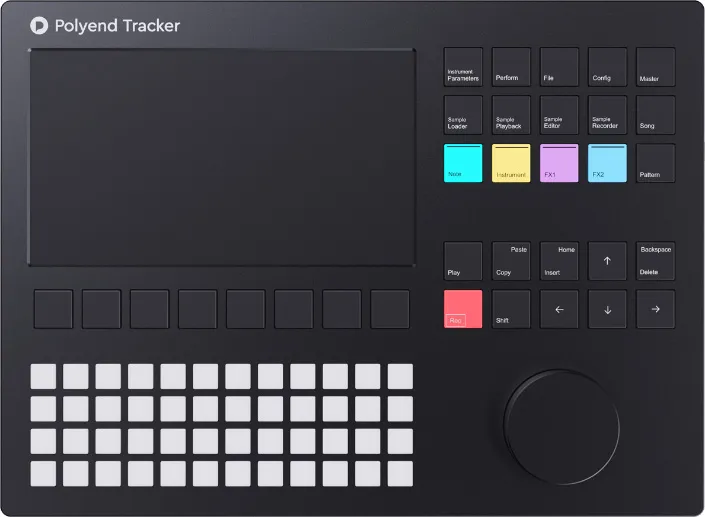
Polyend Tracker+
The Polyend Tracker+ is a hardware sequencer and sampler designed for music production. Released in 2020, it allows users to create complete musical compositions without being limited to looping. This device features a step sequencer with the capability to handle multiple audio and MIDI tracks, enabling the sequencing of synthesizers alongside audio samples. Notable features of the Tracker+ include the ability to apply two effects per track, a song mode for arranging compositions, and a comprehensive sample editing function. It supports stereo samples and offers a variety of synthesis options, including granular and wavetable synthesis. The device is equipped with 48 silicone pads for precise input and an intuitive interface that encourages creativity and workflow efficiency. The Tracker+ is suitable for both studio and live performance settings, allowing users to explore their musical ideas freely. It is powered via USB and includes multiple input and output options, such as mini-jack connectors for audio and MIDI, making it versatile for integration into various setups.